
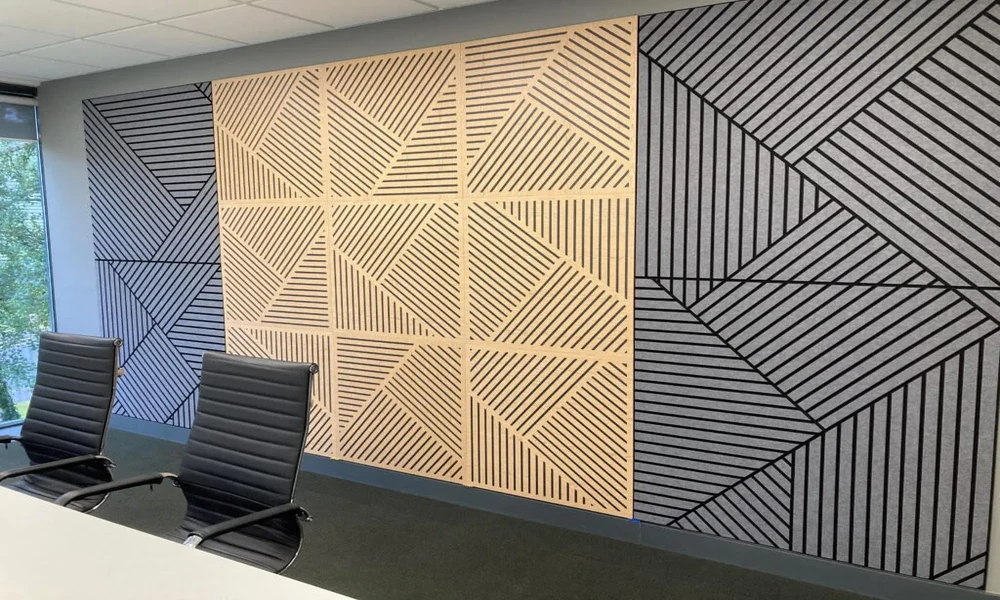
When people think about acoustic panels, the first thing that usually comes to mind is how they look. Colour, fabric, shape, maybe how well they blend into the interior.
But in reality, what matters more is something less visible: how those design choices affect sound itself. Because acoustic panels aren’t just decorative pieces. Small design decisions can noticeably change how a room sounds, even if the layout stays exactly the same.
So instead of treating design as purely aesthetic, it helps to see it as part of the acoustic performance.
The material inside matters more than the surface.
The outer finish of a panel might catch your eye, but what’s inside does most of the work.
Different core materials affect how sound is handled:
- Softer, porous materials absorb more sound energy
- Denser materials control different frequency ranges
- Layered structures can balance multiple types of sound
This is why two panels that look almost identical can perform very differently in the same room. So while design is important for appearance, the internal structure is what actually shapes sound quality.
Thickness changes how sound is absorbed.
Thickness is one of those details people often overlook, but it plays a big role.
In simple terms:
- Thinner panels tend to handle higher frequencies better
- Thicker panels can absorb a wider range of sound, including lower tones
That difference matters because not all sound behaves the same.
For example:
- Speech clarity sits mostly in mid to high frequencies
- Low-frequency noise feels deeper and harder to control
So depending on the space, choosing the right thickness can directly influence how balanced the room sounds.
Placement is part of the design, not just installation.
Where panels are placed often has as much impact as the panels themselves.
Sound doesn’t spread evenly. It reflects off surfaces in predictable patterns.
So professionals usually look at:
- Walls facing each other
- Areas behind seating or desks
- Large, flat surfaces where sound tends to bounce
If panels are placed randomly, they might still help a little, but they won’t be working at their full potential.
Good design considers placement from the start, not after everything is installed.
Coverage levels affect how “controlled” a room feels.
Another important design factor is how much of the surface is treated.
Too little coverage can leave:
- Noticeable echo in untreated areas
- Uneven sound distribution
- A room that still feels slightly noisy
Too much coverage, on the other hand, can make a space feel:
- Overly quiet
- Flat or unnatural
- Lacking in acoustic “life”
The goal is balance.
A well-designed setup reduces unwanted reflections without removing the natural character of the space.
Surface texture influences how sound behaves.
Even the outer finish of a panel plays a role.
Smoother surfaces tend to reflect more sound, while textured or fabric-covered panels help break up sound waves more effectively.
This doesn’t mean smooth panels are ineffective. It just means they behave differently.
So design choices like:
- Fabric type
- Surface pattern
- Perforation style
all contribute to how sound is absorbed or diffused in the room
Shape and layout can change how sound spreads.
Not all panels are flat rectangles anymore.
Modern acoustic design often uses:
- Modular shapes
- Geometric patterns
- Layered or spaced installations
These aren’t just visual choices. They influence how sound moves across a wall.
Breaking up flat surfaces helps reduce strong reflections, which can improve clarity and reduce echo in noticeable ways.
So design isn’t only about aesthetics-it’s also about how effectively sound is interrupted and absorbed.
Colour and design still matter, but indirectly.
Colour doesn’t affect acoustics directly, but it influences how naturally panels fit into a space.
When acoustic panels blend into the interior:
- They’re more likely to be placed where they’re actually needed
- Larger coverage becomes easier to accept visually
- The treatment feels intentional rather than added on
On the other hand, panels that feel visually intrusive often get limited placement, which can reduce their overall effectiveness.
So even though colour isn’t an acoustic factor, it still affects how well the design performs in practice.
Room type should guide every design decision.
Different spaces need different acoustic approaches.
For example:
- Offices prioritise speech clarity
- Homes focus on comfort and softness
- Retail spaces balance sound with atmosphere
The same panel design won’t work equally well in all of them.
That’s why good acoustic design always starts with understanding the space first, then matching materials, thickness, placement, and coverage to that need.
Final Thoughts
Acoustic panel design isn’t just about choosing something that looks good on a wall.
It’s a combination of small decisions that all affect how a space sounds:
When these details come together properly, the difference isn’t just technical-it’s something you can feel.
Conversations become clearer, background noise feels more controlled, and the room stops working against you.
And that’s really what good acoustic design is aiming for: not just better-looking walls, but better-sounding spaces.