
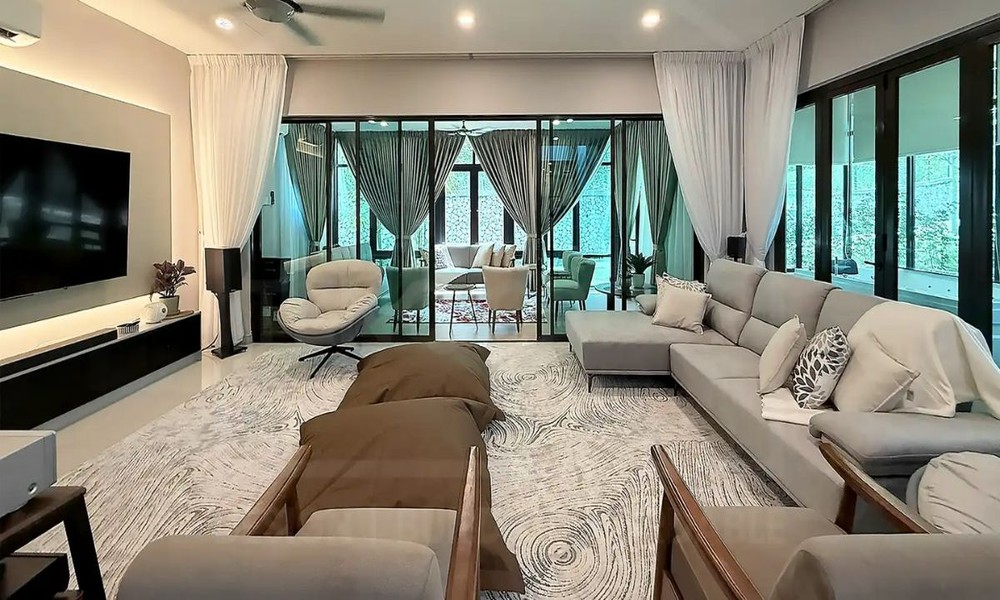
When most homeowners first consider hiring an interior designer, the first thought is usually cost.
“How much is this going to set me back?”
That’s a fair question. But interestingly, in Kuala Lumpur, many homeowners who go through the process later realise something unexpected.
The real conversation isn’t just about cost.
It’s about value and, more specifically, perceived value. Two homes can cost the same to renovate, yet feel completely different in quality and overall home interior design experience.
Here’s why that happens.
1. Design changes how you experience the same space.
At its core, interior design doesn’t change the size of your home.
But it completely changes how that space feels.
A well-designed home can feel:
- More spacious
- More organised
- More comfortable to live in
Even if the square footage stays exactly the same.
In many homes across Kuala Lumpur, this is where perceived value starts. The space feels “bigger” and more functional, which makes the investment feel worthwhile.
2. Good design reduces daily friction.
Think about small, everyday inconveniences:
- Not enough storage
- Poor furniture placement
- Awkward walking paths
- Bad lighting for daily tasks
Individually, they seem minor. But over time, they add up.
Interior design solves these issues at the planning stage.
When your home works smoothly:
- You spend less time adjusting things
- You feel less frustrated
- Daily routines become easier
That improvement in daily living is hard to measure in money but it’s very easy to feel.
3. Perception of quality often matters more than actual cost.
Here’s something many homeowners don’t expect.
A home doesn’t need the most expensive materials to feel premium.
What matters more is:
- How materials are combined
- How finishes are aligned
- How consistent the design feels
A moderately priced home that is well-designed can feel more “expensive” than a high-budget home with poor design decisions.
In Kuala Lumpur, this is why some homes feel high-end even without luxury-level spending.
4. Design influences long-term satisfaction.
Cost is immediate.
Value is long-term.
A cheaper renovation might save money upfront, but if:
- The layout feels inconvenient
- The space becomes cluttered quickly
- Materials wear out too fast
…it leads to dissatisfaction over time.
On the other hand, a well-designed home continues to feel comfortable and functional months or even years later.
That long-term satisfaction is where perceived value becomes clear.
5. A well-designed home feels easier to maintain.
Maintenance is one of the hidden costs of any home.
Poor design often leads to:
- Hard-to-clean areas
- Clutter build-up
- Frequent need for adjustments or replacements
Good design reduces these issues by:
- Incorporating smart storage
- Using practical materials
- Simplifying layouts
In many homes in Kuala Lumpur, this makes daily upkeep much easier, which adds to the overall sense of value.
6. Emotional response plays a bigger role than expected.
People don’t just live in homes-they feel them.
A well-designed space can create:
- Calmness
- Comfort
- A sense of pride
- Enjoyment in daily living
These emotional responses are a huge part of perceived value.
Even if two homes cost the same, the one that feels better emotionally will always be seen as “worth it.”
7. Design helps avoid costly mistakes.
One of the biggest hidden benefits of interior design is preventing mistakes.
Without proper planning, homeowners may:
- Buy furniture that doesn’t fit
- Choose materials that don’t last
- Make layout decisions that don’t work
Fixing these later can be expensive.
Good design reduces the need for rework, which protects your budget in the long run.
8. It supports better resale and rental perception.
Even if you’re not planning to sell, design still affects future value.
A well-designed home:
- Photographs better
- Appeals to more buyers or tenants
- Feels more move-in ready
In competitive property markets like Kuala Lumpur, perception plays a major role in how properties are valued.
And perception is largely shaped by design.
9. The difference shows up in daily life, not just first impressions.
A beautifully designed home might impress guests at first glance.
But the real test is daily living.
Does the space:
- Feel easy to move around in?
- Stay organised without effort?
- Support your routine naturally?
When the answer is yes, the value becomes obvious-not just visually, but experientially.
Final Thoughts
Interior design services are often seen as an added cost.
But in reality, they shape how you experience your home every single day.
In Kuala Lumpur, more homeowners are starting to realise that the real benefit isn’t just how a home looks.
It’s how it:
And when those elements come together, the conversation shifts.
It’s no longer about how much you spent, but about how much value you actually gained from it.